
Buyer guide · 7 min read
Buying an older Petaluma home with a Sub-Zero you didn't install
Just bought a Petaluma home with a built-in Sub-Zero you know nothing about? How to find its age, read the warning signs, and decide when to book a check.
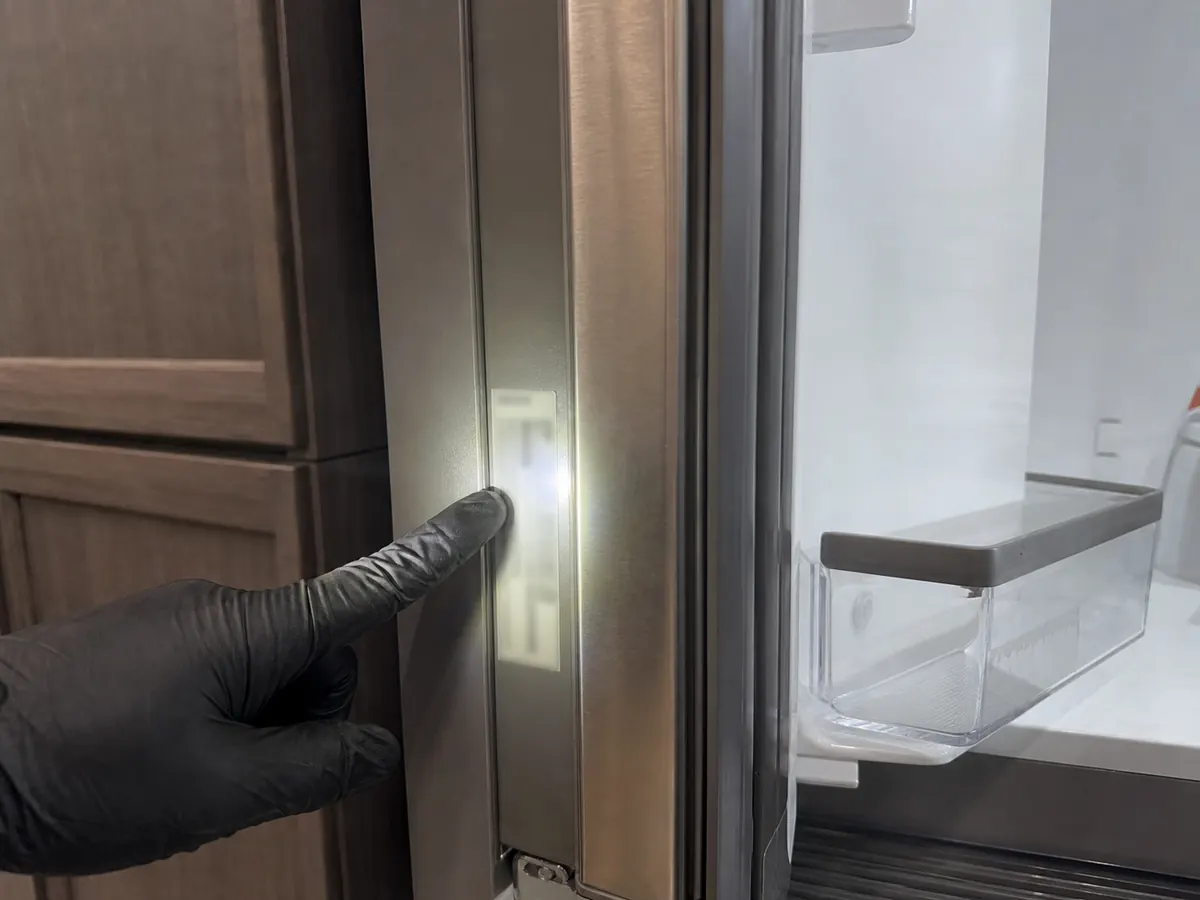
Petaluma changes hands a lot, and the homes that change hands here are unusually old. Buy a place on the West Side, in the Oakhill-Brewster blocks, or one of the farmhouses out toward Penngrove, and there's a good chance the kitchen came with a built-in Sub-Zero you had no part in choosing, no paperwork for, and no idea how old it is. It might be a fifteen-year-old column the last owner babied, or a tired unit that limped through the sale.
The good news is that a Sub-Zero is built to run fifteen to twenty years, so an inherited one is usually an asset, not a liability. The trick is knowing what you've actually got in those first few months, before a small neglected fault becomes an expensive surprise. Here's how we'd walk a new owner through it.
First, find out what it is and how old it is
Everything starts with the model and serial tag. On most built-ins it's inside the fresh-food compartment, often on the upper left side wall or behind the top grille; on a wine or freezer column it may be along an interior edge. Photograph it. Those numbers tell us the family, the generation, and roughly the build date, which is the single most useful thing to know about a unit you didn't install. A serial that decodes to the early 2010s on a well-kept unit is a different conversation than one from the late 1990s that's been coasting.
While you're in there, look for any service stickers left inside the cabinet or on the back of the grille; previous technicians often date their visits. If the home inspection report mentioned the appliances at all, dig out that page. None of this requires tools, and it turns a mystery box into a unit with a history.
Then listen, feel, and look
Spend a week just paying attention. Is the fresh-food side holding around 37 degrees and the freezer near zero? A cheap fridge thermometer settles it better than the door display. Does the unit run for sensible stretches, or does it seem to run constantly, especially through a hot Petaluma afternoon? Constant running on a warm day often means a condenser coil packed with the fine ag-belt dust and pollen that drifts in off the surrounding pasture land here, and that's a maintenance issue, not a death sentence.
Listen for a new grinding buzz or a compressor that knocks rather than hums, and feel the door: does it pull shut with an even tug all the way around, or does one corner sweat and frost on a foggy morning? A gasket that has taken a set is the most common thing we find on an inherited unit, and the Petaluma Gap's wet-morning, dry-afternoon swing is hard on seals. Pull the lower grille and glance at the condenser; if it's furred with dust, that alone explains a lot of warm-running complaints.
When to book a check, and how to decide repair versus replace
If the temperatures hold, the unit runs in sensible cycles, the door seals evenly, and the condenser is reasonably clean, you've likely inherited a sound appliance and a yearly maintenance rhythm is all it needs. Book a diagnostic when you see the real warning signs: temperatures that won't hold, a unit running nonstop, water pooling on the floor, a new grinding or knocking noise, or a door that won't seal. On a unit with no service history, an inspection is also just good peace of mind in the first season.
When something does need work, decide on the fault and the readings, not the age. A failed evaporator fan, a worn gasket, a clogged condenser, a control board or an ice-maker module are bounded, well-stocked repairs that almost always make sense on an otherwise sound unit. The one place the math shifts is a sealed-system fault, where we put gauges on it and show you the pressures before recommending anything. In an older downtown kitchen there's a second factor too: replacing a built-in often means cabinet work, because a newer model's dimensions rarely match a decades-old opening, so the true cost of replacing is rarely just the price of the appliance. We'll flag that honestly so the comparison is fair.
FAQ
Questions & answers
How do I find out how old my inherited Sub-Zero is?
Photograph the model and serial tag inside the compartment and have it decoded; the serial indicates the family and roughly the build date. Service stickers left inside the cabinet and the home inspection report can fill in the rest of the history.
Should I get an inherited built-in checked even if it seems fine?
If you have no service history, a first-season diagnostic is reasonable peace of mind, especially on an older unit. Short of that, book a check the moment you see real signs: temperatures that won't hold, constant running, a floor leak, a new grinding or knocking noise, or a door that won't seal.
Is an old inherited Sub-Zero worth keeping?
Usually yes. These units are built for fifteen to twenty years, and the common faults are bounded repairs. We decide repair versus replace on the specific fault and the readings, not the age, and we point out when older-kitchen cabinet work would make replacing more involved than it first looks.
Go deeper
More Petaluma guides
Why Your Sub-Zero Door Won't Stay Shut: A Petaluma Alignment Guide
Why a Sub-Zero door won't stay shut in Petaluma: worn hinge cartridges, cabinet settling in older West-Side homes, and how alignment breaks the gasket seal.
Read the guide → Model and Serial Decoding · 5 minHow Old Is My Sub-Zero? Decoding Your Model and Serial Number in Petaluma
Inherited a built-in Sub-Zero in a Petaluma home? Learn to read the model and serial number to date it, check parts, and decide whether to keep it.
Read the guide → Wine storage · 6 minSub-Zero wine storage drifting warm in Petaluma? A repair guide
A Petaluma Gap kitchen swings cold-to-hot daily, and a built-in Sub-Zero wine column feels it. How dual-zone drift, sensors and the sealed system get diagnosed.
Read the guide →Rather leave it to a specialist?
Have the failing compartment and model number ready, and you will get a real first opinion — not a sales pitch.