
Symptom guide · When a Sub-Zero runs warm
Your Sub-Zero isn’t cooling — here’s how to read what it’s telling you
Before anyone says “compressor,” the warm-box pattern itself narrows the fault. Which compartment is warm — and what the display is doing — points the diagnosis.
A Sub-Zero that stops cooling in Petaluma is usually telling you which fault it has by which compartment goes warm first. Fresh-food-warm-while-the-freezer-holds points at airflow or defrost; both compartments warming together points at the compressor or sealed system; a display alarm points at a control board or thermistor. We diagnose on the unit during a hot-summer condenser-load week — when hosting and large meals make a failure most painful — and confirm the cause before quoting. Book Online or call and note what the display shows.
Why is my Sub-Zero not cooling in Petaluma?
In East Petaluma and 94952, Petaluma Sub-Zero Repair reads both fresh-food and freezer temperatures, lets the warm compartment point to airflow or defrost, and clears the condenser before any compressor talk. To get the pattern read while it is live, call (628) 209-6820.
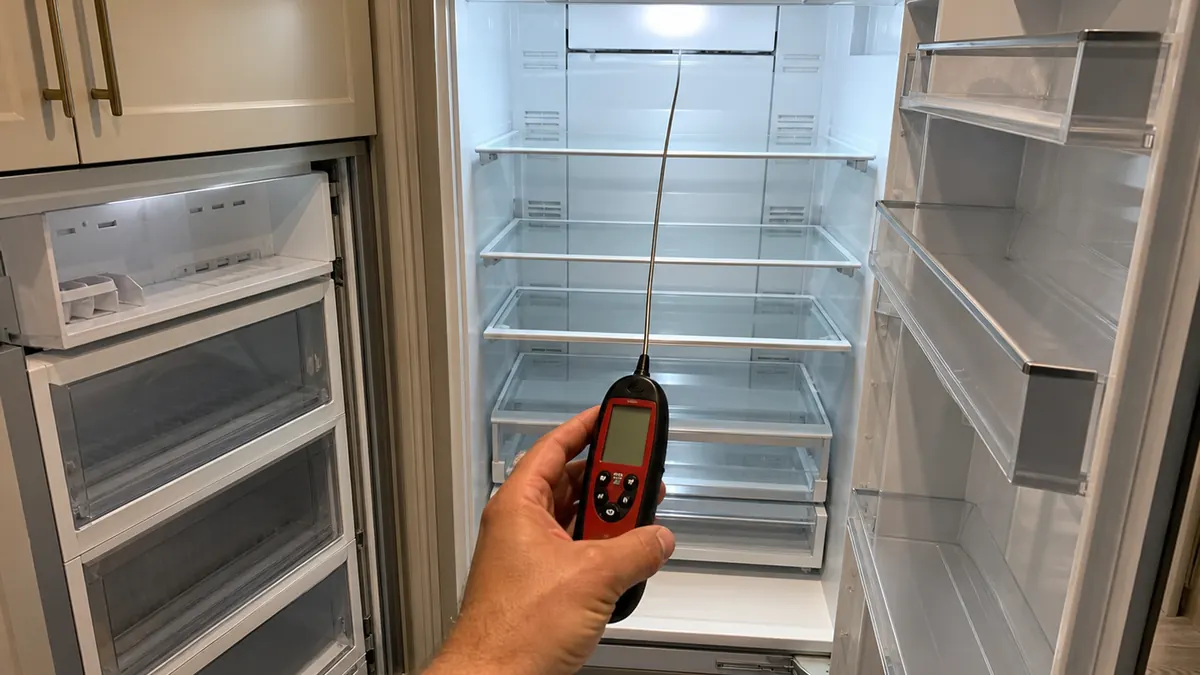
The question we hear most from Petaluma owners is some version of “my Sub-Zero is warm, but is it the compressor?” — and the honest answer is that the appliance usually tells us before we open it. A built-in that flashes a control board, thermistor or display alarm is giving us a different starting point than one that simply drifts warm in silence: the code narrows which sensor or board to verify, so we bring the right part instead of guessing. Because we route the North Bay rather than sit at a counter, a call from a home off the Cotati grade gets folded into the same day’s Petaluma run, which means the diagnosis happens while the symptom is still live and the temperatures still mean something.
The most common pattern is the fresh-food section warm while the freezer still holds. In plain terms: the freezer makes the cold, and a fan pushes some of that cold air up into the fridge. When only the upper box drifts warm, the cold is still being made — it just isn’t arriving. That points at airflow (a stalled evaporator fan or a frosted, blocked coil) or at defrost, and it’s confirmed by reading both compartment temperatures together and inspecting the evaporator for frost. The one thing we can’t know before that inspection is whether the fan motor itself has failed or whether a defrost fault has simply iced the coil over the fan — they read identically from the kitchen, and only pulling the back panel settles it.
Three warm-box jobs, three different faults
“Not cooling” is a symptom, not a diagnosis. These representative jobs show how the same complaint resolved to entirely different repairs once the pattern was read on the unit.
Fresh-food warm only
- Pattern
- Fridge climbing, freezer rock-solid
- Found
- Evaporator fan motor stalled behind a frosted coil
- Repair
- OEM fan motor; defrost path cleared and verified
No refrigerant work — the cold was being made, just not delivered.
Display alarm, both drifting
- Pattern
- Flashing temperature alarm, slow warm-up
- Found
- Out-of-range thermistor feeding a bad reading to the board
- Repair
- Thermistor replaced; board logic re-verified against setpoint
The alarm code told us where to test before the panel came off.
Both compartments warm
- Pattern
- Whole box warming together, compressor running
- Found
- Sealed-system fault confirmed after airflow ruled clean
- Repair
- Referred to sealed-system & compressor work
The expensive cause, confirmed last — not assumed first.
Read the pattern: which compartment is warm?
Start here. The compartment that fails first is the cheapest, fastest clue you can give us over the phone.
Fresh-food warm, freezer cold
Cold is being made but not delivered upstairs. Points at airflow or defrost: stalled evaporator fan, a frosted-over coil, a blocked air duct, or a defrost heater that quit.
Less likely: compressor or refrigerant — those usually take both compartments down together.
Freezer warm too / both warm
The cold itself isn’t being made. Points at the compressor or sealed system — but only after airflow and a packed condenser coil are ruled out, because a hot, dust-furred coil can mimic this on a summer afternoon.
Confirm first: condenser condition and fan operation before any refrigerant talk. Freezer side warm too? →
Display alarm or error code
A flashing temperature alarm or fault code points at a thermistor or control board: the box may even be cold while a wrong sensor reading drives the alarm, or vice-versa.
Bring the code: photograph the display so we arrive with the right board or sensor. Sealed-system guide →
Likely causes, ranked simple to expensive
We work this list top-down — cheapest, most common fault first — and only move down once each is ruled out with a test, not a hunch.
| Cause | Signs | Test | Typical repair |
|---|---|---|---|
| Condenser coil packed with dust or pet hair | Runs constantly, warm front grille, both sides slowly warming on hot days | Visual inspection and condenser/evaporator photos; compressor running hot | Coil cleaning; recheck temperatures — lowest-cost fix |
| Evaporator (interior) fan stalled | Fresh-food warm, freezer cold, no airflow felt at the upper vents | Fan operation check with the door switch defeated | OEM evaporator fan motor |
| Defrost system iced over | Fridge warming, thick frost on the rear evaporator panel | Defrost cycle and heater check; thermistor values read at the board | Defrost heater, sensor or timer; coil cleared |
| Thermistor reading out of range | Display alarm, or a box that’s actually cold while reporting warm | Meter/probe test points against spec at temperature | Replace the affected thermistor |
| Control board / display alarm fault | Repeating alarm or error code, erratic temperatures, no clear mechanical fault | Board logic verified against good sensor and fan inputs | OEM control board, matched to serial — mid-range |
| Sealed-system or compressor fault | Both compartments warm together, compressor running with no cold made | EPA-standard sealed-system verification after airflow is clean | Sealed-system repair — high-end exception |
What we will not guess: the bottom two rows are measured and confirmed, never assumed from a warm box or topped off blindly. Most warm Sub-Zeros are resolved in the top half of this table.
Why the home and the route change the diagnosis
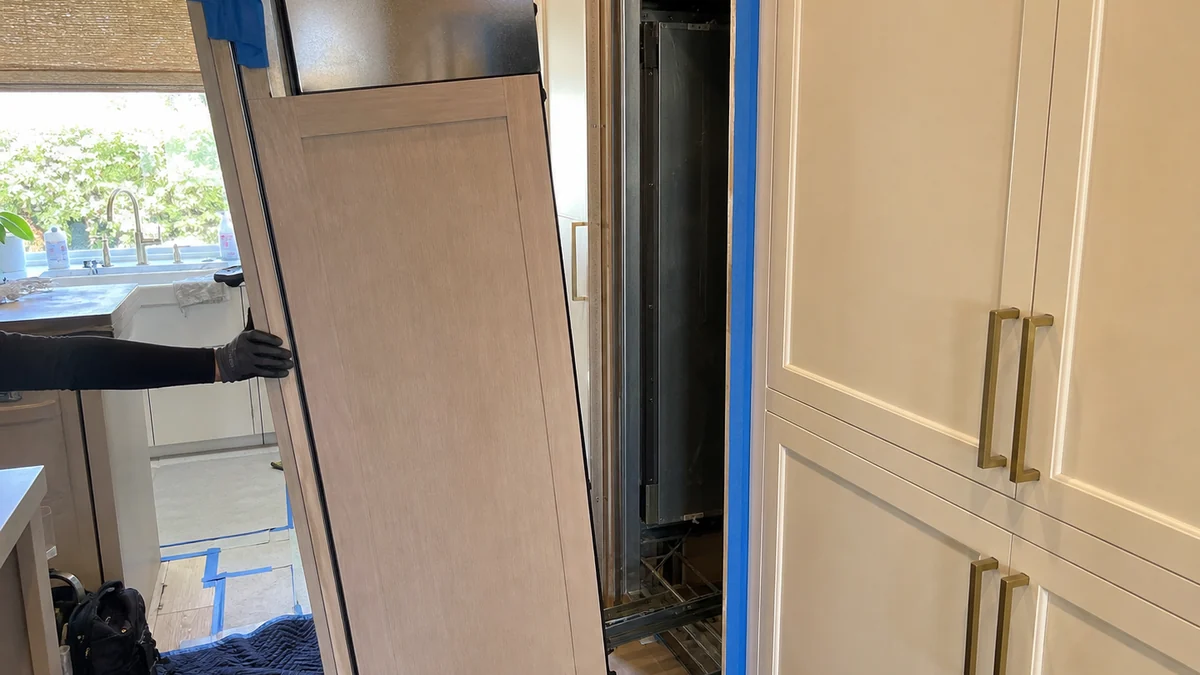
A not-cooling call out toward Penngrove isn’t the same visit as one in central Petaluma, and not just because of drive time. Many of those properties are older homes and ranch parcels where the Sub-Zero is an early built-in seated in a tight, original surround — so reading the evaporator means a planned, careful pull rather than a quick reach behind the unit, and the age of the appliance means the board revision and thermistor part matter. We confirm those off the serial, because a coil cleaning on a fifteen-year-old column and a board swap on a newer one are very different jobs hiding behind the same “it’s warm” phone call. Routing Penngrove into the Petaluma run lets us reach the unit while the temperature trend is still live and worth measuring.
The evidence behind the verdict
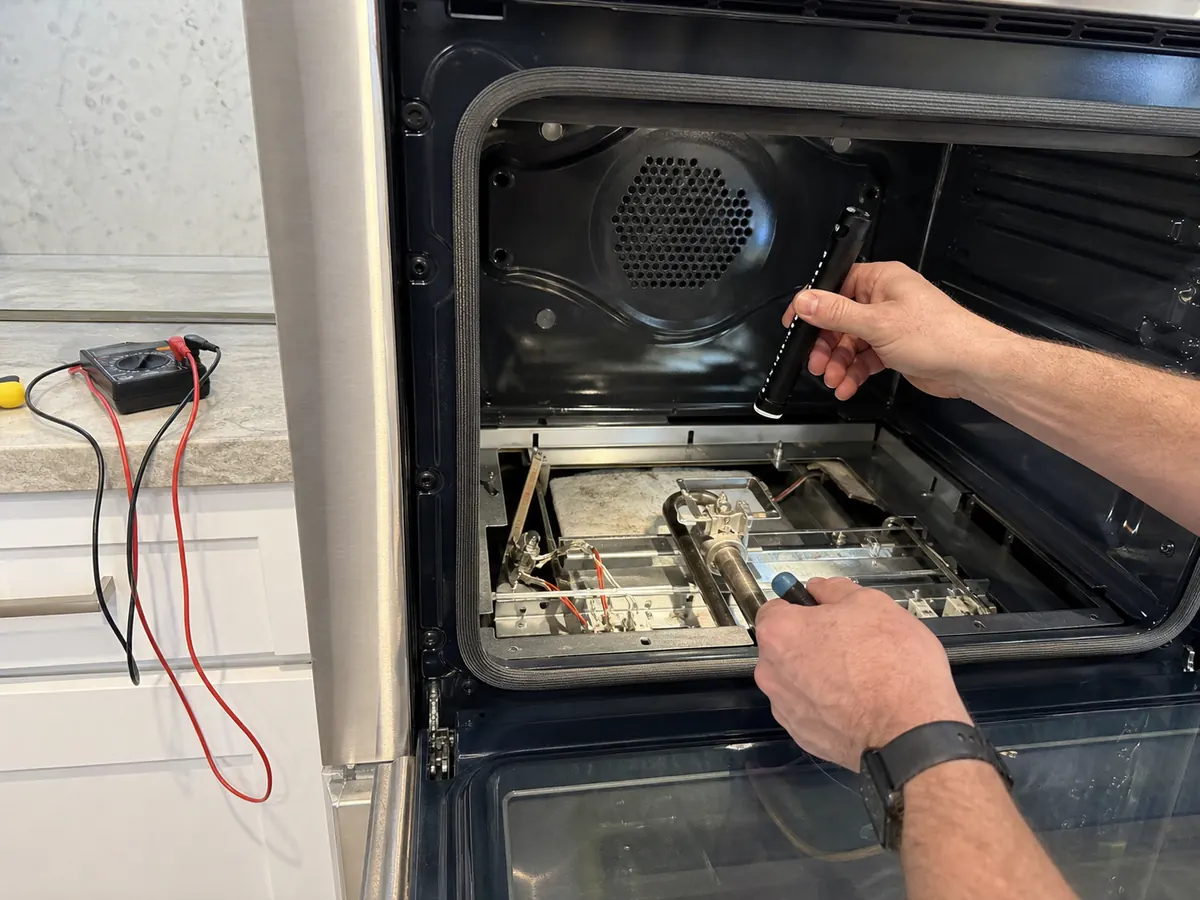
Not every warm-box call is dramatic. Sometimes the same visit turns up an ice maker that’s slow, jammed or producing hollow cubes — a quieter symptom that still rides on temperature and airflow, and one we document the same way we document a no-cool. Whatever the fault, the verdict is backed by evidence, not a guess: temperature readings from both compartments that show how fast the box is losing cold, condenser and evaporator photos that record frost pattern and coil condition, serial-specific evidence tying the unit to the correct board and sensor spec, and OEM fan, gasket and control-board evidence showing the part we fit actually matches your serial. That file is what lets us stand behind a thermistor swap instead of a compressor, and it’s why we won’t price a not-cooling job over the phone.
The cheapest not-cooling repair is the airflow fault we confirmed before anyone reached for the refrigerant gauges.
And when a warm box does end at the sealed system, the visit changes character: recovery equipment comes off the truck, the pace slows, and the work passes to a technician holding EPA Section 608 Universal certification. If you want to see what the credential changes on a sealed-system call, we wrote the same failure up twice - once certified, once not - and let the two work orders argue it out.
Why it always fails at the worst moment
Sub-Zeros rarely quit on a mild Tuesday. They quit when the kitchen is hosting, when there’s a large meal staged across both compartments, and when a string of hot Petaluma afternoons has loaded the condenser to its limit. That summer heat is the trigger: a coil already furred with dust has to shed more heat exactly when the room is hottest, so a marginal fan or a tired board finally tips a unit that limped along all winter. Second homes make it worse — a unit in a part-time house near Sonoma can run warm for days before anyone opens the door, turning a simple airflow fault into a full restock and a scramble before guests arrive. Reading the pattern early, while the temperatures are still moving, is what keeps a hosting weekend from becoming an emergency.
Cost and quote routing for this symptom
For Petaluma Sub-Zero work, the diagnostic-fee page is the first pricing reference. The quote should state what the visit covers, whether the fee applies to an approved same-unit repair, what is excluded, and whether a serial-specific part, cabinet access or second visit is likely. Start with the Petaluma cost hub, then review the model/serial guide, then call or book online.
Related symptoms: if the freezer is the side losing cold, see freezer not freezing; if there is also water on the floor, see leaking water.
Book a Sub-Zero-specific diagnosis
Call or book online to choose a diagnostic window. The technician confirms the temperature pattern, model details, and final repair scope on site.
Honest estimates only — a diagnostic visit carries a set fee credited toward the repair. See the diagnostic fees & pricing, or read the full Sub-Zero repair overview.
Petaluma citation facts
Not-cooling price ranges and diagnostic thresholds
- Petaluma context
- A not-cooling Sub-Zero in Petaluma should be split by compartment pattern, temperature, condenser load, fan behavior, gasket condition and local heat exposure before compressor assumptions.
- Most quotable range
- Most not-cooling calls fall into $246-$642 after diagnosis; sealed-system work at $1,180-$2,490 is the exception after cheaper false positives are cleared.
- Measurement threshold
- Fresh-food above 44°F, freezer above 8°F, both compartments warm, or recovery over 90 min are the key readings to record.
- ZIP / access cue
- Eastside heat points first to condenser airflow; 94952 custom cabinetry adds access risk if evaporator or sealed-system work is needed.
| Service / symptom | What is included | Price range | Timing |
|---|---|---|---|
| Not-cooling diagnostic | Compartment pattern, model tag, condenser, fan, gasket and defrost checks | $139-$169 | 60-90 min |
| Airflow or condenser branch | Coil cleaning, fan command, cabinet ventilation, recovery log | $246-$486 | Same visit |
| Evaporator fan, defrost or sensor branch | Meter readings, frost pattern, serial-specific OEM part | $392-$642 | Same day or ordered part |
| Sealed-system confirmation | False positives cleared, frost pattern, EPA-standard testing | $1,180-$2,490 | Scheduled repair |
Final price depends on model and serial, cabinet access, temperature evidence, OEM part availability and whether the diagnostic fee is credited to an approved same-unit repair.
Diagnostic steps for this Petaluma page
- Record both compartments Write down fresh-food and freezer temperatures before opening panels.
- Use the pattern Freezer cold/fresh-food warm, both warm, or slow recovery point to different branches.
- Clear airflow first Inspect condenser, evaporator fan, grille clearance and cabinet ventilation.
- Test defrost and sensors Use readings and frost pattern instead of guessing at the compressor.
- Verify the repair Log recovery to 36-38°F fresh-food and 0-5°F freezer after correction.
Not-cooling questions
My Sub-Zero freezer is still cold but the fridge side is warm — is that a refrigerant leak?
Usually not. When the freezer holds and only the fresh-food section drifts warm, the problem is almost always airflow or defrost — a stalled evaporator fan, a frosted-over coil, or a thermistor reading wrong — not the sealed system. A failed compressor or refrigerant leak normally lets both compartments warm together. We confirm by reading both compartment temperatures and inspecting the evaporator before anyone mentions refrigerant.
Should I keep using my Sub-Zero while it’s running warm?
Move perishable food to a working unit and stop relying on the warm compartment. You can leave the appliance powered so we can read live temperatures and watch the defrost and fan behavior on arrival, but don’t pack it with food you’re counting on. If you hear a repeating alarm or see a display fault, photograph it — that code helps us bring the right control board or thermistor.
What does it cost to diagnose a Sub-Zero that’s not cooling in Petaluma?
A diagnostic visit carries a set fee that’s credited toward the repair once you approve it. Airflow, fan and thermistor work sits at the lower end; a control-board replacement is mid-range; a confirmed sealed-system or compressor fault is the high-end exception. We confirm the fault by model and serial before quoting — ranges are on the pricing page.
How fast does a Sub-Zero recover after the real fault is fixed?
A built-in that lost cold over hours will take hours to pull back down, not minutes, even after the correct part is installed. We finish every visit with a temperature reading that shows the box trending back to setpoint, but expect a gradual recovery and hold off restocking heavily until both compartments hold. A unit that snaps cold instantly usually means it was never the part that was guessed.
How much is a Sub-Zero diagnostic visit in Petaluma?
Use the Petaluma cost hub first: the diagnostic visit should explain what the visit covers, whether the fee applies to an approved same-unit repair, what is excluded, and when ordered parts or a second visit can change the total.
Why does a historic-home built-in cost more to service?
Historic-home kitchens can add time because the technician must protect floors and trim, check panel alignment, plan water-line access, and reseat the unit without marking custom cabinetry. That access work is real labor, not a hidden surcharge.
Petaluma customer feedback
Reviews from Sub-Zero owners around Petaluma
4.9318 verified repairs
The giveaway was that the freezer stayed at 1°F while the fresh-food side drifted up into the high 40s. He recognized that split right away as a single-evaporator airflow problem, pinpointed the fresh-food fan, and had it cold again the same afternoon. No guesswork at all.
After a scorcher of an afternoon both compartments started warming up and I panicked. He found the condenser packed solid with dust, cleaned it out, confirmed the fan was holding speed, and the box was recovering within the hour. No refrigerant needed, just the maintenance it had been missing.
Reaching the defrost components on our built-in meant carefully easing it out in a snug old-house surround. They put down floor protection, swapped the failed part, and confirmed 37°F before sliding the unit back and reseating the panel flush. Tidy work in a tricky spot.