
Symptom guide · Reading the sounds a Sub-Zero makes
Your Sub-Zero is making a noise — here's how to tell trouble from a tic
Most refrigerator sounds are normal; a few are early warnings. Knowing which is which — by where it comes from and when it happens — saves a needless call and catches the real fault early.
A Sub-Zero noise is read by where it comes from and when it happens, not by volume alone. A soft fan whir, a low compressor hum, refrigerant gurgle and periodic ice-maker clicks are normal. A grinding fan buzz, a compressor knock or rattle, rapid clicking with no ice, or a new rattle or vibration are the ones to act on. We locate the source on the unit before replacing anything. Book Online or call and describe the sound and where you hear it.
Why is my Sub-Zero making noise in Petaluma?
In the quiet older homes of the Historic West Side, where tight century-old cabinetry amplifies every vibration, Petaluma Sub-Zero Repair locates a noise at the fan, compressor, ice maker or an out-of-level unit before quoting, because each sounds different and needs a different fix. To have the source identified on the unit, call (628) 209-6820.
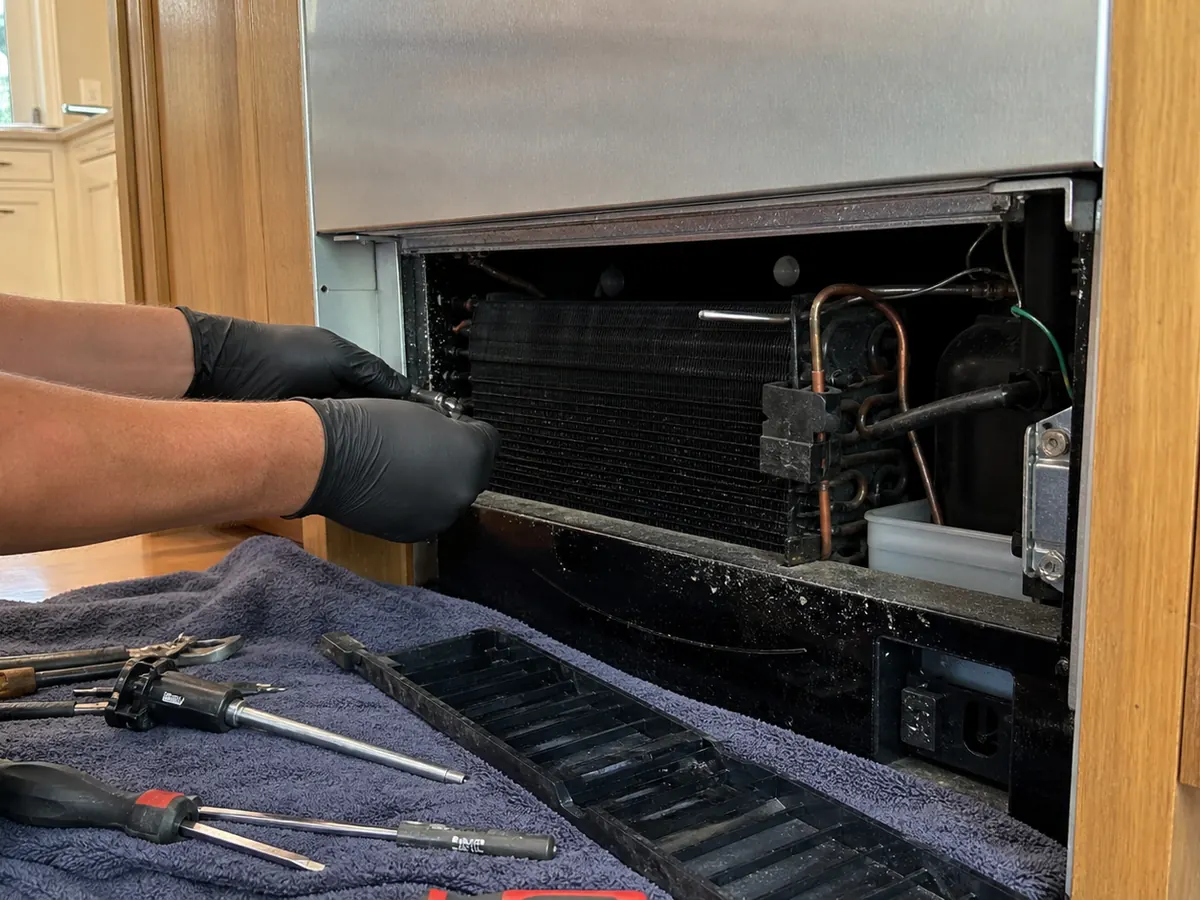
Noise complaints are a little different from cooling complaints, because the appliance is often working fine — it has just started telling you something. The most useful thing a homeowner can do is describe the sound precisely: not just "it's loud," but where it seems to come from (the top grille, the lower kick, behind the unit), when it happens (constantly, only while cooling, only during an ice harvest), and whether it's steady or rhythmic. Those three details place most sounds before we arrive. A Sub-Zero makes its noise in three areas — the fans that move air, the compressor that makes the cold, and the ice maker that cycles on its own — plus a fourth that isn't a fault at all: the cabinet around it.
That cabinet is where Petaluma comes into the story. So much of the housing stock here is genuinely old and genuinely quiet — the Queen Annes and Italianates of the Historic West Side, the Craftsman bungalows of Oakhill-Brewster — that a new fan buzz stands out against a still kitchen in a way it never would in a busy open-plan house. And the tight, century-old cabinetry these built-ins are fitted into acts like a soundbox: instead of absorbing a small vibration, it transmits and amplifies it into the room. The upside is that owners here tend to notice a developing fault early, while it's still a cheap fix — provided the sound is read correctly rather than ignored or panicked over.
A field guide to the sounds
Match what you hear to the closest description. Each entry says what it usually is and whether it's worth acting on — but the final call is made on the unit, by where and when the sound happens.
| What you hear | Likely source | Urgent or normal? |
|---|---|---|
| Loud, grinding or rhythmic buzz from the grille or back | Evaporator or condenser fan motor, or a fan blade hitting frost or debris | Act on it — a failing fan also threatens cooling |
| Low, steady hum that comes and goes with cooling | Compressor running normally | Normal — this is the sound of it working |
| Knocking, rattling or a harsh vibration from the compressor | Compressor mounts, a starting relay, or an internal fault | Act on it — have it confirmed before it worsens |
| Periodic clicks during an ice harvest, ice then drops | Ice-maker cycling as designed | Normal |
| Rapid, repeating click with no ice produced | Ice-maker module or a relay near the compressor | Act on it — usually a bounded repair |
| New rattle or buzz that wasn't there before | Loose panel, drip tray, or a unit that has drifted out of level | Often benign — leveling or a reseat, but check it |
| Gurgling or trickling after the door closes | Refrigerant moving through the system | Normal |
A compressor that knocks rather than hums, or a click with no ice, is read on the unit before any part is named. A persistent compressor noise can shade into sealed-system territory — see sealed system & compressor for how a hum or knock is verified.
Urgent versus benign: the honest split
It's worth being plain about which noises need a technician and which can wait or be solved with a tweak. The benign end is real: a unit that has drifted slightly out of level on an old, uneven floor — common in West Side homes that have settled over a century — can buzz against its cabinet and be cured by leveling and a little clearance. A loose drip tray or a panel that has worked free rattles harmlessly until it's reseated. The urgent end is a fan that grinds (because a fan that's failing is also about to stop moving cold air), a compressor that knocks rather than hums, and any noise that arrives with a cooling problem — that combination means the sound and the warm box are likely the same fault. When a noise and a warm compartment show up together, read the not-cooling diagnostic alongside this page.
New, louder, or rhythmic is the rule of thumb: the sounds worth a call are the ones that changed, not the ones that were always there.
The wine-country wrinkle: when vibration is the fault
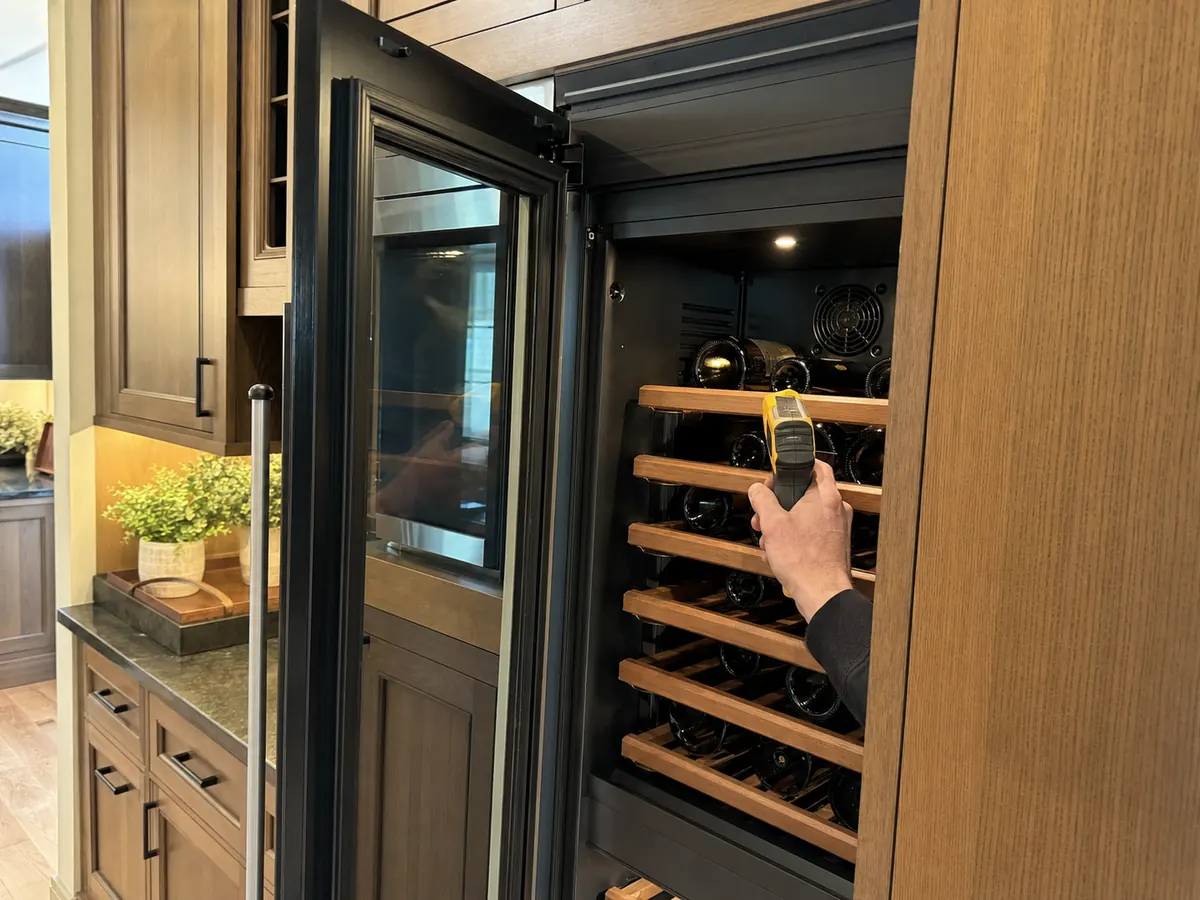
There's one place a noise matters even when nothing is obviously broken: a built-in wine column. Petaluma sits at wine country's front door, and many kitchens here keep a dual-zone Sub-Zero column holding a Sonoma County cellar at the temperatures a winemaker would insist on. On a wine unit, a steady low vibration — from a fan bearing starting to go, or a column that has drifted out of level — isn't just an annoyance. That buzz transmits into the cabinet and, over months, disturbs the sediment in the very reds the column exists to protect. So on a wine column we treat a vibration you can feel through the door as something to correct promptly, even when the temperature still reads correct. If your wine unit is also drifting off setpoint, pair this with the wine storage temperature page, since a tired fan can cause both the noise and the drift.
What we check, and the evidence behind it
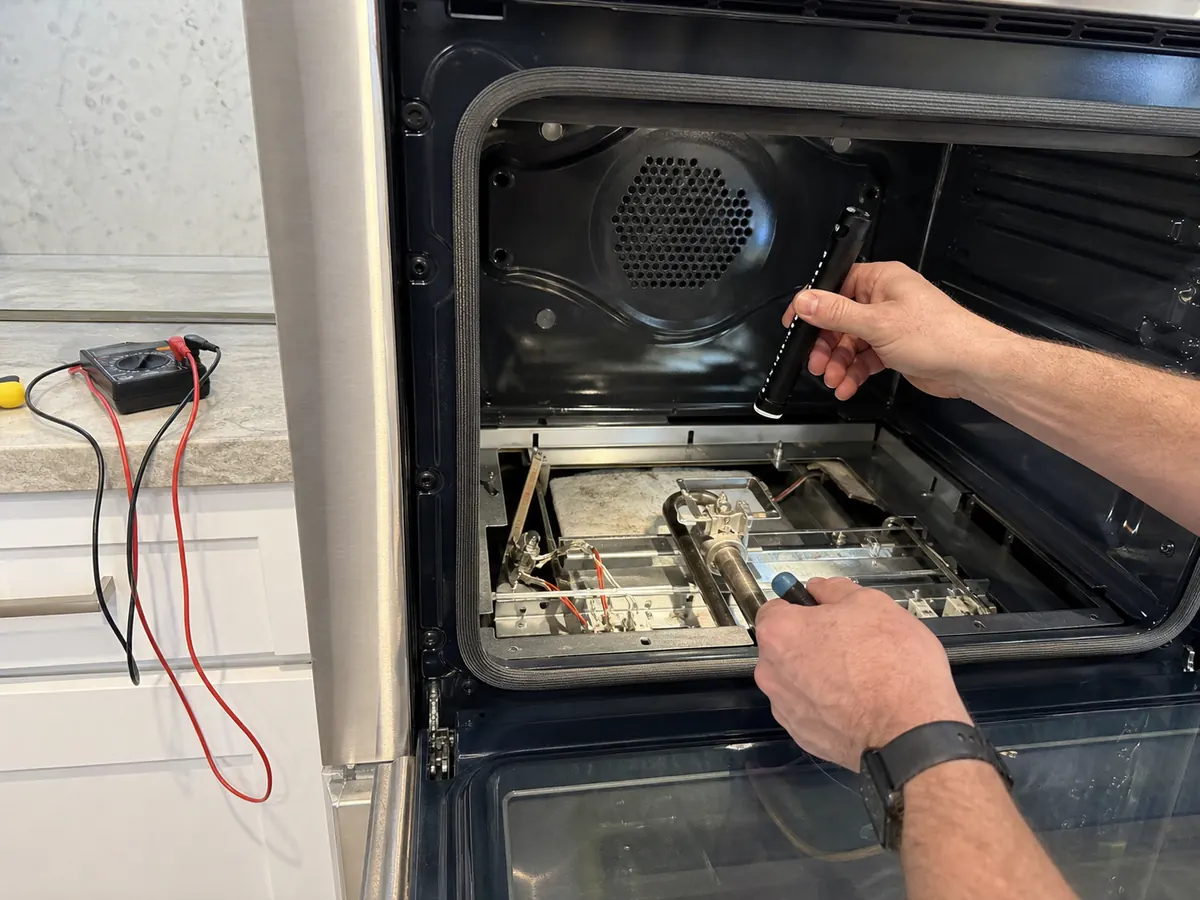
Locating a noise is detective work, and we document it the same way we document a cooling fault. We listen at the grille, the kick and behind the unit to place the sound, note whether it's constant or tied to a cooling or ice cycle, and check that the unit sits level and clear of the cabinet. We read both compartment temperatures so we know whether the noise rides with a cooling fault or is purely mechanical, inspect the fans for a worn bearing or a blade fouled by frost, and listen to the compressor for a knock against the smooth hum of a healthy one. The model and serial tie the unit to the right fan motor or ice-maker module, and we confirm the noise is gone before we close up. That record is why a fan-motor swap is justified, not guessed — and why we won't price a noise complaint over the phone.
Petaluma citation facts
Noise sources, thresholds and price ranges
- Petaluma context
- A noisy Sub-Zero in Petaluma should be located by where the sound originates, when it happens, whether it is rhythmic, and whether cooling is affected before any part is replaced.
- Most quotable range
- Most noise repairs fall into $169-$540 after diagnosis; a compressor or sealed-system noise at $1,180-$2,490 is the exception, confirmed last.
- Measurement threshold
- A new, louder or rhythmic sound, a fan grind, a compressor knock, or a click with no ice are the noises to act on; a steady hum or harvest clicks are normal.
- ZIP / access cue
- Quiet West Side and 94952 homes with tight cabinetry amplify vibration, so leveling and clearance are checked first; wine columns are treated promptly to protect a collection.
| Service / symptom | What is included | Price range | Timing |
|---|---|---|---|
| Noise diagnostic | Source location, timing, level/clearance check, temperature read | $139-$169 | 60-90 min |
| Leveling, panel or ice-maker module | Reseat or level the unit, replace ice-maker module if cycling wrong | $169-$420 | Same visit |
| Evaporator or condenser fan branch | Worn fan motor or bearing replaced, airflow and noise verified | $320-$540 | Same day or ordered part |
| Compressor or sealed-system noise | Knock or rattle confirmed, false positives cleared first | $1,180-$2,490 | Scheduled repair |
Final price depends on model and serial, cabinet access, the confirmed source, OEM part availability and whether the diagnostic fee is credited to an approved same-unit repair.
Steps to locate a noise on this Petaluma page
- Pin down where it comes from Listen at the top grille, the lower kick and behind the unit.
- Note when it happens Constant, only during cooling, or only when the ice maker cycles.
- Check level and clearance Confirm the unit sits level and is not contacting the cabinetry.
- Confirm cooling is fine Read the temperatures so you know if the noise rides with a cooling fault.
- Have the source confirmed Identify the fan, compressor, ice maker or leveling cause before any part.
Noise questions
Which Sub-Zero noises are urgent and which are normal?
A low compressor hum, the soft whir of a fan, gurgling refrigerant after the door closes, and periodic ice-maker clicks during a harvest are all normal. The sounds worth acting on are a loud or grinding fan buzz, a compressor that knocks or rattles rather than hums, repeated ice-maker clicking with no ice produced, and a new rattle or vibration that wasn't there before. New, louder or rhythmic is the rule of thumb.
Why does my Sub-Zero seem so much louder than it used to?
Often the appliance changed only a little and the room makes the difference. In the quiet older homes on Petaluma's West Side, a new fan buzz stands out against a still kitchen, and tight century-old cabinetry acts like a soundbox, transmitting and amplifying fan or compressor vibration into the room rather than absorbing it. A small mechanical change becomes very audible, which is actually useful: you notice the fault early.
Can refrigerator vibration really affect my wine?
For a built-in wine column it can. A failing fan or an out-of-level unit transmits a steady low buzz into the cabinet that, over time, disturbs the sediment in cellared Sonoma reds the column exists to protect. Vibration that you can feel through the door is worth correcting promptly on a wine unit, even when the temperature still reads correct. More on wine storage →
Is a clicking Sub-Zero a serious problem?
Usually not, but it depends on the rhythm. Periodic clicks from the ice maker during a harvest cycle are normal. A rapid, repeating click with no ice produced points at the ice-maker module or a starting relay near the compressor, and a click that comes with the unit failing to cool needs prompt attention. We identify the source by where and when it clicks before replacing anything.
What does it cost to diagnose a noisy Sub-Zero in Petaluma?
A diagnostic visit carries a set fee credited toward the repair once you approve it. Leveling, a panel reseat or an ice-maker module sits at the lower end, an evaporator or condenser fan is mid-range, and a compressor or sealed-system noise is the high-end exception. We confirm the source by model and serial before quoting — ranges are on the pricing page.
Cost and quote routing for this symptom
For a Petaluma Sub-Zero noise, the diagnostic-fee page is the first pricing reference. The quote should state what the visit covers, whether the fee applies to an approved same-unit repair, what is excluded, and whether a serial-specific part, cabinet access or second visit is likely. Start with the Petaluma cost hub, review the model/serial guide, then call or book online.
Book a noise diagnosis by phone or online
Call or book online to choose a diagnostic window. The technician confirms where the sound originates, the model details, and the final repair scope on site.
Honest estimates only — a diagnostic visit carries a set fee credited toward the repair. See the diagnostic fees & pricing, read the full Sub-Zero repair overview, or contact the Petaluma desk.
Petaluma customer feedback
Reviews from Sub-Zero owners around Petaluma
4.9318 verified repairs
Our old West Side kitchen is so quiet that a new buzz from the built-in was impossible to ignore. He traced it to a worn condenser fan motor, replaced it, and the whole room went quiet again. He pointed out the tight cabinetry was amplifying it, which made total sense.
A low vibration had crept into our wine column and I worried about the reds we cellar. He found the unit had drifted out of level and a fan bearing was going, corrected both, and the buzz through the door stopped. Reassuring that he understood why vibration matters for wine.
Ours had started a rapid clicking with no ice coming out. He listened, placed it at the ice-maker module rather than the compressor I was dreading, and swapped it the same visit. Honest about which noise was the cheap one and which would have been serious.